
It's been a little longer than I'd hoped before my next post in my A-Z. This is due to that thing called writing a novel - see E and D. But I'll put aside some time in the next few days to add my next post, which will be about foreign rights.
S. xx
Wednesday, 26 November 2008


Saturday, 8 November 2008
It turns out...
...that I'm allergic to red wine. Not white. Red.
My favourite colour.
And chocolate too. Really.
What, I am asking myself, is left in life?
My favourite colour.
And chocolate too. Really.
What, I am asking myself, is left in life?
Wednesday, 5 November 2008
E is for Editing
There's a Regina Spektor song called 'Edit'. She sings: You can write but you can't edit. Now I dearly love all Regina's music, but she's not going to get very far with an attitude like that, is she? Editing is up there with writing the book in the first place and, of course, actually having a story to tell. It is, in other words, Very Important.
I can only speak for myself when describing how to do it. Editing, like writing, is a personal business. Every writer has their own way, I guess. But ultimately the end result is the same. Or at least should be. Editing makes a book the very best it can be. It hones and polishes, cuts out the crap, does away with all those crazy notions that the writer once thought were clever. It loses all those wordy, overwrought sentences. It banishes whole scenes - even entire characters/sub-plots/threads - to the recycle bin. Editing is a breath of freh air after all those sweaty months of hammering out the first draft. And not editing your work is akin to buying a new gown and turning up at the ball without make-up or brushing your hair. Eeek!
I've very, very nearly finished the first draft of my new novel. When I write, the first thing I do each day is read what I wrote the day before. I spend some time making alterations, usually nothing major. I don't get too hung up on minute details. But anything glaring and I'll whip it into shape there and then. Then I get on with my day's writing, knowing that before long I'll be revisiting the text many times anyway. The thing is, as I approach the end, I'm desperate to go back to the beginning. Writing a novel (especially a 120k word novel) is a very fluid process. Of course I start out with strong ideas and a solid plot, but things have a habit of changing along the way. Therefore, earlier writing needs altering to fit in with new ideas/strands/characters so it all hangs together. Or I might feel that the overall balance of the novel is wrong - not enough action early on... Or perhaps the tone changes or a character has had to acquire a new trait to make some plot aspect convincing.
When I'm writing, I have several other files open for notes. I have timelines and character charts and a chapter by chapter summary that I fill in as I go along. But I also have a 'points to change' file, which is an enormous help when it comes to editing. My memory isn't so good and I'd find it impossible to recall everything that I've decided needs altering. When I turn back to the first page ready to edit, the first thing I do is go through these notes and make my suggested changes. By this time, I might not agree with some of the earlier ones, but they act as good memory-joggers to make sure an idea is watertight.
After I've worked through the list, which can take some time, I'll go back to the beginning once again and start reading through. This, for me, is quite a slow process. No dashing through the novel in eight hours. It could take as many weeks. I edit (I do all my work straight onto the computer. My handwriting is both slow and illegible) as I read, making tiny changes (spelling etc) to striking out whole pages or, sometimes, entire chapters. For me, the first draft is very much just 'getting it down'. I'd be pretty mortified if anyone read it at this stage. I also make notes to myself within the text as I go along, in another colour, if I get stuck on something. Coming back a few days later with a fresh eye is often the key to fixing a problem.
Editing isn't just making the words hang together right and sound pretty or slick or enticing when being read. Editing is about sticking to your guns, making certain that if a character is meant to be angry throughout, they don't suddenly go around hugging trees for no apparent reason. Editing tightens themes, carries sub-plots, and most importantly, makes the writing convincing. It does away with sloppy writing, wild thoughts and notions that have no place or add no value to the story. It makes the story true to itself.
When I get to the end of the book, with a bunch of fresh notes, I go right back to the beginning and do it all again. Then again. And again. And probably again and again.
At some point during the 'again and agains' above, my agent will get to see the typescript. I will hold my breath until she gets back to me and, guess what? She will have lots of good ideas for editing. We will discuss these, probably think of some new ideas together, and then I'll incorporate these too. As I'm writing in the new ideas, they are first draft writing and, in turn, will need to be edited. It is a never ending process, but a line does have to be drawn at some point. That's when we'll send the novel to my editor a Headline.
Every day I think of how fortunate I am to have such a brilliant agent and editor. And I'm not just saying that for the hell of it. New authors are hardly in a position to pick and choose these two key characters when starting their careers, so ending up working with people who are on the same level, who listen to my ideas, add their own thoughts in a way that's neither bombastic or flimsy, who have the very same intentions at heart as me - to put the very best books out there - is surely a good thing.
Anyway, this is when my editor gets her red pen out and adds her mark. It's physical. It's on paper. It's in her handwriting and sometimes entire pages get struck out. Sometimes I think: How can she not like that? Sometimes, to coin a phrase, she completely slaughters my darlings, even though I've already spent weeks trying to do the same myself. And sometimes she adds comments about the bits she loves, about how things hang together in the way we've discussed. Sometimes she adds just a word or two that is so insightful it makes me wonder what I've been doing these last few weeks - why didn't I see that myself? Having an editor is like seeing the novel with a new pair of eyes; a fresh brain. She edits from the eyes of the reader, the booksellers, the reviewers, the sales team, marketing and publicity, but most of all she edits for me. Because she understands totally what I'm trying to achieve and, if she doesn't think it's quite there, she'll show me how and why and where. Just how she does this is is a complete mystery to me. And also, how she does this so quickly, so accuarately and without getting in a muddle. It's easy to forget that I'm not her only author. She has lots of other books all at various stages of production. I've seen them, stacked up in her office and it's daunting to say the least. Let's all toast good editors.
I thought it might be interesting to show a page of UNSPOKEN after it's been beneath my editor's pen. I just randomly plucked out a page (making sure it didn't have any spoilers!)

When she sends the typescript back to me, she also sends a letter detailing all the ideas we've discussed. Then, with a big pot of tea, I sit down at my computer and I...edit. This will probably take me a couple of weeks. It's a very big pot of tea.
Then back it goes to my editor - of course keeping my agent up to speed and asking for her very valued advice. Sometimes I don't agree with suggested changes. Sometimes my editor agrees with my point of view and sometimes she doesn't. I've never 'argued' about changes - thankfully because we all seem to be on the same wavelength in our editorial triangle - but sometimes I've not been keen to budge. Somehow we all shift into each others' gears. Somehow my agent smooths the waters.
Once these changes are agreed, the edits get honed down to miniscule alterations. But sometimes these can be the most important. A single sentence added or removed could make or break a chapter, or indeed the whole novel if something is revealed too soon etc. Once all this is ironed out, the typescript goes off to the copy editor. To become a copy editor, you have to have been an eagle in a former life. They spot things normal mortals can't. Think typos, grammar, continuity, style - house and writing - and other bits and pieces that we have missed so far. It's like polishing the lipstick off your teeth before you step out in that new gown. It's one last OCD glance in the mirror.
Then the typescript comes back to me and...I sit down with a very big pot of tea... You get the picture. Once I've gone through stack of pages again, I send it back. My editor goes through everything again, raisies queries about my queries, perhaps adds a few more changes based on my changes as a result of the copy editor's changes...then, finally, the novel will go off to the typesetter.
Then I get it back. More tea...more mark-ups, more back and forth...etc etc... then, if we're lucky, silence. Just the clackety-clack of the printing press. Not the time to be thinking about edits.
So, as you can see, editing is a huge part of writing. I wouldn't say it's the most part, but very nearly. There has to be something there in the first place to edit, but once you have that first draft, once you've spent months and months writing, don't do yourself a disservice by not editing. Now go and listen to Regina Spektor's song and sharpen your pencil.
And let me know how YOU do it.
Sam xx
I can only speak for myself when describing how to do it. Editing, like writing, is a personal business. Every writer has their own way, I guess. But ultimately the end result is the same. Or at least should be. Editing makes a book the very best it can be. It hones and polishes, cuts out the crap, does away with all those crazy notions that the writer once thought were clever. It loses all those wordy, overwrought sentences. It banishes whole scenes - even entire characters/sub-plots/threads - to the recycle bin. Editing is a breath of freh air after all those sweaty months of hammering out the first draft. And not editing your work is akin to buying a new gown and turning up at the ball without make-up or brushing your hair. Eeek!
I've very, very nearly finished the first draft of my new novel. When I write, the first thing I do each day is read what I wrote the day before. I spend some time making alterations, usually nothing major. I don't get too hung up on minute details. But anything glaring and I'll whip it into shape there and then. Then I get on with my day's writing, knowing that before long I'll be revisiting the text many times anyway. The thing is, as I approach the end, I'm desperate to go back to the beginning. Writing a novel (especially a 120k word novel) is a very fluid process. Of course I start out with strong ideas and a solid plot, but things have a habit of changing along the way. Therefore, earlier writing needs altering to fit in with new ideas/strands/characters so it all hangs together. Or I might feel that the overall balance of the novel is wrong - not enough action early on... Or perhaps the tone changes or a character has had to acquire a new trait to make some plot aspect convincing.
When I'm writing, I have several other files open for notes. I have timelines and character charts and a chapter by chapter summary that I fill in as I go along. But I also have a 'points to change' file, which is an enormous help when it comes to editing. My memory isn't so good and I'd find it impossible to recall everything that I've decided needs altering. When I turn back to the first page ready to edit, the first thing I do is go through these notes and make my suggested changes. By this time, I might not agree with some of the earlier ones, but they act as good memory-joggers to make sure an idea is watertight.
After I've worked through the list, which can take some time, I'll go back to the beginning once again and start reading through. This, for me, is quite a slow process. No dashing through the novel in eight hours. It could take as many weeks. I edit (I do all my work straight onto the computer. My handwriting is both slow and illegible) as I read, making tiny changes (spelling etc) to striking out whole pages or, sometimes, entire chapters. For me, the first draft is very much just 'getting it down'. I'd be pretty mortified if anyone read it at this stage. I also make notes to myself within the text as I go along, in another colour, if I get stuck on something. Coming back a few days later with a fresh eye is often the key to fixing a problem.
Editing isn't just making the words hang together right and sound pretty or slick or enticing when being read. Editing is about sticking to your guns, making certain that if a character is meant to be angry throughout, they don't suddenly go around hugging trees for no apparent reason. Editing tightens themes, carries sub-plots, and most importantly, makes the writing convincing. It does away with sloppy writing, wild thoughts and notions that have no place or add no value to the story. It makes the story true to itself.
When I get to the end of the book, with a bunch of fresh notes, I go right back to the beginning and do it all again. Then again. And again. And probably again and again.
At some point during the 'again and agains' above, my agent will get to see the typescript. I will hold my breath until she gets back to me and, guess what? She will have lots of good ideas for editing. We will discuss these, probably think of some new ideas together, and then I'll incorporate these too. As I'm writing in the new ideas, they are first draft writing and, in turn, will need to be edited. It is a never ending process, but a line does have to be drawn at some point. That's when we'll send the novel to my editor a Headline.
Every day I think of how fortunate I am to have such a brilliant agent and editor. And I'm not just saying that for the hell of it. New authors are hardly in a position to pick and choose these two key characters when starting their careers, so ending up working with people who are on the same level, who listen to my ideas, add their own thoughts in a way that's neither bombastic or flimsy, who have the very same intentions at heart as me - to put the very best books out there - is surely a good thing.
Anyway, this is when my editor gets her red pen out and adds her mark. It's physical. It's on paper. It's in her handwriting and sometimes entire pages get struck out. Sometimes I think: How can she not like that? Sometimes, to coin a phrase, she completely slaughters my darlings, even though I've already spent weeks trying to do the same myself. And sometimes she adds comments about the bits she loves, about how things hang together in the way we've discussed. Sometimes she adds just a word or two that is so insightful it makes me wonder what I've been doing these last few weeks - why didn't I see that myself? Having an editor is like seeing the novel with a new pair of eyes; a fresh brain. She edits from the eyes of the reader, the booksellers, the reviewers, the sales team, marketing and publicity, but most of all she edits for me. Because she understands totally what I'm trying to achieve and, if she doesn't think it's quite there, she'll show me how and why and where. Just how she does this is is a complete mystery to me. And also, how she does this so quickly, so accuarately and without getting in a muddle. It's easy to forget that I'm not her only author. She has lots of other books all at various stages of production. I've seen them, stacked up in her office and it's daunting to say the least. Let's all toast good editors.
I thought it might be interesting to show a page of UNSPOKEN after it's been beneath my editor's pen. I just randomly plucked out a page (making sure it didn't have any spoilers!)
When she sends the typescript back to me, she also sends a letter detailing all the ideas we've discussed. Then, with a big pot of tea, I sit down at my computer and I...edit. This will probably take me a couple of weeks. It's a very big pot of tea.
Then back it goes to my editor - of course keeping my agent up to speed and asking for her very valued advice. Sometimes I don't agree with suggested changes. Sometimes my editor agrees with my point of view and sometimes she doesn't. I've never 'argued' about changes - thankfully because we all seem to be on the same wavelength in our editorial triangle - but sometimes I've not been keen to budge. Somehow we all shift into each others' gears. Somehow my agent smooths the waters.
Once these changes are agreed, the edits get honed down to miniscule alterations. But sometimes these can be the most important. A single sentence added or removed could make or break a chapter, or indeed the whole novel if something is revealed too soon etc. Once all this is ironed out, the typescript goes off to the copy editor. To become a copy editor, you have to have been an eagle in a former life. They spot things normal mortals can't. Think typos, grammar, continuity, style - house and writing - and other bits and pieces that we have missed so far. It's like polishing the lipstick off your teeth before you step out in that new gown. It's one last OCD glance in the mirror.
Then the typescript comes back to me and...I sit down with a very big pot of tea... You get the picture. Once I've gone through stack of pages again, I send it back. My editor goes through everything again, raisies queries about my queries, perhaps adds a few more changes based on my changes as a result of the copy editor's changes...then, finally, the novel will go off to the typesetter.
Then I get it back. More tea...more mark-ups, more back and forth...etc etc... then, if we're lucky, silence. Just the clackety-clack of the printing press. Not the time to be thinking about edits.
So, as you can see, editing is a huge part of writing. I wouldn't say it's the most part, but very nearly. There has to be something there in the first place to edit, but once you have that first draft, once you've spent months and months writing, don't do yourself a disservice by not editing. Now go and listen to Regina Spektor's song and sharpen your pencil.
And let me know how YOU do it.
Sam xx
Monday, 20 October 2008
Coalville Library Crime Fiction Festival
I'm talking at Coalville Library Crime Fiction Festival on Saturday November 15th from 2pm. You can hear wise words from me (eek - better write some) about my life as an author and also find out lots about my books. You can buy them, too (hint hint) and I will deface them for you with my signature.
Writing festivals are good things. It means us authors have something to look forward to. During that particular week, you can attend a murder mystery evening, vote for a selection of authors, or listen to an Agatha Christie talk by John Martin, a chap who certainly knows his stuff.
Would love to see you there. Coalville is in Leicestershire, btw, so no excuses now you know where it is.
S.
Writing festivals are good things. It means us authors have something to look forward to. During that particular week, you can attend a murder mystery evening, vote for a selection of authors, or listen to an Agatha Christie talk by John Martin, a chap who certainly knows his stuff.
Would love to see you there. Coalville is in Leicestershire, btw, so no excuses now you know where it is.
S.
Monday, 13 October 2008
D is for Deadlines
The clue's in the word, right. Deadlines.
As an author, there's no escaping them. Before I was published, in those carefree days before contracts, all I wanted was a deadline. Please someone make me finish this book by Easter. Couldn't you pressure me just a little bit? Proper writers had deadlines, and I wanted one too.
'Ooh, no. Sorry. Won't be able to make that lunch date. I have an urgent deadline.' It was up there with 'Speak to my agent' in terms of feeling 'proper'. It was a badge of honour. I was certain it would gain me entry to some kind of exclusive authorial club; make me exude special literary pheromones; have everyone believe I was a real writer. All it did was make me rush out and buy more dye to hide the extra grey hairs.
So everything's set out in black and white. The contract states that in, let's say, twelve months your publisher not unreasonably would like delivery of a clean, readable manuscript. That it has to be a well-edited, polished, exciting, flawless guaranteed bestseller doesn't add that much extra pressure does it?
How then, does twelve months - a whole year - suddenly seem like a couple of days? How does spring become August, and summer transform in the blink of an eye into Autumn? Damn those Christmas cards and tinsel! How dare they be put out in the shops before I've finished my book.
The wise thing to do would be to plan ahead. Set a certain number of words to write each month, week, day - whatever gets you towards your deadline in a steady, unflappy way. Trouble is, life happens. Kids need taking to the dentist or have days off school with tummy ache. People 'pop' in thinking, ah, she only works from home. She'll be glad of the company. Then there's the business side of things, accounts, phone calls, emails, and checking proofs of the previous book, maybe attending the odd event or two, speaking at libraries etc. All this eats away at time allocated to write. Not to mention actually having a day or so off at the weekend or spending time with the family. Working from home is fantastic for 'fitting things in' (however much I may grumble about distractions) but also it can lead to novel-exhaustion because work is always there. There's nothing like a couple of days off (or a bar of chocolate) to get the creative juices flowing again. But that's hard to achieve when there's a screaming deadline looming.
Anyway, the upshot is... my latest deadline for my new novel is January 09. At the time of writing this post, I have written exactly 92530 words out of around 120000 words. So I'm not doing too bad. There's no panic yet. By the end of October, I will have finished the first draft, leaving me three months for revisions and editing, although the school holidays sit like the Grand Canyon in my work schedule.
I'm pretty disciplined about my writing most days. I don't feel good if progress is slow. And I also don't feel good about writing if the house is a mess or there's no food in the fridge. However, seeing as this is usually the case and my family are pretty resourceful, this deadline-induced state of mayhem is tolerated. And when the book's done, it's always time for a spring-clean, whatever the time of year. I like to thoroughly muck out my office. Get sorted. Scrunch up all those chocolate wrappers and gather up all the dirty coffee cups. It's a cleansing ritual. Make way for the new idea.
There's nothing quite like the feeling of meeting a deadline (except I had to get an extension last time!) apart from meeting a deadline with a novel that your editor loves and believes readers will love too. That, I guess, is what keeps me chugging forward. What keeps me wanting to write - and I would, deadline or not.
As an author, there's no escaping them. Before I was published, in those carefree days before contracts, all I wanted was a deadline. Please someone make me finish this book by Easter. Couldn't you pressure me just a little bit? Proper writers had deadlines, and I wanted one too.
'Ooh, no. Sorry. Won't be able to make that lunch date. I have an urgent deadline.' It was up there with 'Speak to my agent' in terms of feeling 'proper'. It was a badge of honour. I was certain it would gain me entry to some kind of exclusive authorial club; make me exude special literary pheromones; have everyone believe I was a real writer. All it did was make me rush out and buy more dye to hide the extra grey hairs.
So everything's set out in black and white. The contract states that in, let's say, twelve months your publisher not unreasonably would like delivery of a clean, readable manuscript. That it has to be a well-edited, polished, exciting, flawless guaranteed bestseller doesn't add that much extra pressure does it?
How then, does twelve months - a whole year - suddenly seem like a couple of days? How does spring become August, and summer transform in the blink of an eye into Autumn? Damn those Christmas cards and tinsel! How dare they be put out in the shops before I've finished my book.
The wise thing to do would be to plan ahead. Set a certain number of words to write each month, week, day - whatever gets you towards your deadline in a steady, unflappy way. Trouble is, life happens. Kids need taking to the dentist or have days off school with tummy ache. People 'pop' in thinking, ah, she only works from home. She'll be glad of the company. Then there's the business side of things, accounts, phone calls, emails, and checking proofs of the previous book, maybe attending the odd event or two, speaking at libraries etc. All this eats away at time allocated to write. Not to mention actually having a day or so off at the weekend or spending time with the family. Working from home is fantastic for 'fitting things in' (however much I may grumble about distractions) but also it can lead to novel-exhaustion because work is always there. There's nothing like a couple of days off (or a bar of chocolate) to get the creative juices flowing again. But that's hard to achieve when there's a screaming deadline looming.
Anyway, the upshot is... my latest deadline for my new novel is January 09. At the time of writing this post, I have written exactly 92530 words out of around 120000 words. So I'm not doing too bad. There's no panic yet. By the end of October, I will have finished the first draft, leaving me three months for revisions and editing, although the school holidays sit like the Grand Canyon in my work schedule.
I'm pretty disciplined about my writing most days. I don't feel good if progress is slow. And I also don't feel good about writing if the house is a mess or there's no food in the fridge. However, seeing as this is usually the case and my family are pretty resourceful, this deadline-induced state of mayhem is tolerated. And when the book's done, it's always time for a spring-clean, whatever the time of year. I like to thoroughly muck out my office. Get sorted. Scrunch up all those chocolate wrappers and gather up all the dirty coffee cups. It's a cleansing ritual. Make way for the new idea.
There's nothing quite like the feeling of meeting a deadline (except I had to get an extension last time!) apart from meeting a deadline with a novel that your editor loves and believes readers will love too. That, I guess, is what keeps me chugging forward. What keeps me wanting to write - and I would, deadline or not.
Sunday, 12 October 2008
Desperately Seeking
Most unusual search string that brought someone to my blog this month?
Suzi Quatro's local gym.
It raises a number of questions...
Suzi Quatro's local gym.
It raises a number of questions...
Tuesday, 7 October 2008
No Right Turn
At one end of my street, you can't turn right. You also can't turn right when coming into my road either. This is for two reasons. 1) To stop my street being used as a rat-run. It's pleasant and has trees and children and cats. We don't want lots of cars down here. 2) The other reason is that, if you turn right out of my street onto the busy road, you hold up everyone behind you because, during rush hour, it's impossible to turn right. Going left, circling the roundabout, coming back again, keeps everything flowing.
So WHY does the woman in the four wheel drive - think huge, black, shiny and with a silly private plate that probably spells her name if you squint, stand on your head, and pronounce it with a French accent - WHY does she always insist on holding me up in the morning by bloody turning right out of MY street?
Today I managed to squeeze up on her left. I wound down my window. I shook my fist at her. I yelled 'Can't you read? It's no right turn.'
She could see right over the top of my little red diesel Fiesta that costs me £35 a year to tax, peanuts to insure, and does 65 miles to the gallon. So there she sat, staring over my roof, watching all the traffic go by, as I struggled to see over her rhinoceros-sized bonnet. Then she laughed at me. Then she wound down her window. She told me I should get a bigger car then I'd be able to see.
She is so going in a book. So going to drive a Del Boy-style three-wheeler. (Maybe I should re-read my previous post.)
So WHY does the woman in the four wheel drive - think huge, black, shiny and with a silly private plate that probably spells her name if you squint, stand on your head, and pronounce it with a French accent - WHY does she always insist on holding me up in the morning by bloody turning right out of MY street?
Today I managed to squeeze up on her left. I wound down my window. I shook my fist at her. I yelled 'Can't you read? It's no right turn.'
She could see right over the top of my little red diesel Fiesta that costs me £35 a year to tax, peanuts to insure, and does 65 miles to the gallon. So there she sat, staring over my roof, watching all the traffic go by, as I struggled to see over her rhinoceros-sized bonnet. Then she laughed at me. Then she wound down her window. She told me I should get a bigger car then I'd be able to see.
She is so going in a book. So going to drive a Del Boy-style three-wheeler. (Maybe I should re-read my previous post.)
Thursday, 2 October 2008
C is for Character
Everyone has one, don't they? A character, that is. It's what makes us human. It's what makes us react to situations. It's what makes others either like or dislike us. It is, ultimately, responsible for our decision making and therefore rather vital to have in a novel. If anything's going to actually happen, that is.
Years ago, when I wasn't very experienced... (and I know, compared to some authors, I still have a long way to go - although I'm nearly done writing my sixth published novel) ... I weighted my characters with layer upon layer of traits, attributes, reactions, ways of thinking, emotion, how they looked, navel-gazing, so that there simply wasn't any room for a story. Or if there was, no one noticed it because it was buried beneath all these over-zealous characters. It was a drag to read. No one in real life has that much 'character' - not all at once, anyway, and not so contrived.
It was an interesting and slow process, how I learnt about characterisation. People would politely ask 'What is your book about?'. (I'd written several complete novels before anything actually got published). My answer was usually something along the lines of 'A feisty woman who is angry, opinionated, and has a passion for XYZ. Then there's a man who's bereft, sad, lonely... A daughter who's rebellious, crazy, annoying...' I couldn't tell them what the book was actually about - er, because it wasn't really about anything. Apart from a bunch of overwrought characters.
After a while, because of all the comments/feedback I'd been getting from various sources, I began to tone down the larger-than-life players who broke into my work. They became more subtle, more realistic, and of course ultimately more believable. If something doesn't ring true with a reader, if you give them reason to shout out Yeah right enough times, then bit by bit you'll lose their attention. So this left me with a cast of characters who, OK, might have been a bit too bland in many ways, but at least they weren't all stereotypes and overreacting to, er, nothing.
The thing was, I was left with these characters, but there was no story as such. No plot. No momentum. Nothing to bring out their true worth. That's where story comes in (see future post). Without a story to tell, there's no way for your readers to get to know your characters. Without characters, there's no way to tell your story. They are chained together. It was at that time, surprisingly late on in my many failed attempts at publication, that I finally realised this simple fact. Had I not flunked out on my MA in Creative Writing, I would have learnt this a lot sooner.
It was a dawn breaking over my keyboard. An epiphany. And it was incredibly hard work at first, having to think of this whole 'story' thing. But it didn't half give the characters I'd been struggling with a sense of purpose, a real sense of place and belonging in my work. This may sound rather simplistic - and indeed it is. The crafting of an entire novel is far more intricate, dependent on so many other factors (not least a good editor). I doubt I'm qualified yet to even hazard a guess at what it is that makes a novel 'work'. But what I do know - from my own experiences only of course - is that character and story are intrinsically linked. It's even hard to write this post about characters without going on about story.
So now, when my feisty, angry, opinionated woman with a passion for German accents, sports cars, and train spotting strides onto the pages, or a bloke with an eating disorder, a divorce and a body odour problem, just won't go away, I'll throw a good dose of story at them. Watch them curl up and die.
Years ago, when I wasn't very experienced... (and I know, compared to some authors, I still have a long way to go - although I'm nearly done writing my sixth published novel) ... I weighted my characters with layer upon layer of traits, attributes, reactions, ways of thinking, emotion, how they looked, navel-gazing, so that there simply wasn't any room for a story. Or if there was, no one noticed it because it was buried beneath all these over-zealous characters. It was a drag to read. No one in real life has that much 'character' - not all at once, anyway, and not so contrived.
It was an interesting and slow process, how I learnt about characterisation. People would politely ask 'What is your book about?'. (I'd written several complete novels before anything actually got published). My answer was usually something along the lines of 'A feisty woman who is angry, opinionated, and has a passion for XYZ. Then there's a man who's bereft, sad, lonely... A daughter who's rebellious, crazy, annoying...' I couldn't tell them what the book was actually about - er, because it wasn't really about anything. Apart from a bunch of overwrought characters.
After a while, because of all the comments/feedback I'd been getting from various sources, I began to tone down the larger-than-life players who broke into my work. They became more subtle, more realistic, and of course ultimately more believable. If something doesn't ring true with a reader, if you give them reason to shout out Yeah right enough times, then bit by bit you'll lose their attention. So this left me with a cast of characters who, OK, might have been a bit too bland in many ways, but at least they weren't all stereotypes and overreacting to, er, nothing.
The thing was, I was left with these characters, but there was no story as such. No plot. No momentum. Nothing to bring out their true worth. That's where story comes in (see future post). Without a story to tell, there's no way for your readers to get to know your characters. Without characters, there's no way to tell your story. They are chained together. It was at that time, surprisingly late on in my many failed attempts at publication, that I finally realised this simple fact. Had I not flunked out on my MA in Creative Writing, I would have learnt this a lot sooner.
It was a dawn breaking over my keyboard. An epiphany. And it was incredibly hard work at first, having to think of this whole 'story' thing. But it didn't half give the characters I'd been struggling with a sense of purpose, a real sense of place and belonging in my work. This may sound rather simplistic - and indeed it is. The crafting of an entire novel is far more intricate, dependent on so many other factors (not least a good editor). I doubt I'm qualified yet to even hazard a guess at what it is that makes a novel 'work'. But what I do know - from my own experiences only of course - is that character and story are intrinsically linked. It's even hard to write this post about characters without going on about story.
So now, when my feisty, angry, opinionated woman with a passion for German accents, sports cars, and train spotting strides onto the pages, or a bloke with an eating disorder, a divorce and a body odour problem, just won't go away, I'll throw a good dose of story at them. Watch them curl up and die.
Tuesday, 23 September 2008
B is for Book-Buyers
It is, of course, also for 'books', but I wasn't about to write about that. That would have been silly. We all know what books are.
Book-buyers are Very Important People. When I say book-buyers, I don't mean the book-buying public. Of course, retail customers are extremely important, and I am grateful to every single one of them. Without them, there would be no book industry. There would be no me sitting here bashing away at the computer every day. No, I'm referring to the book-buyers who stock the bookshops and supermarkets. The ones that pick out lists of titles from the dozens of catalogues they receive, and the many sales presentations they sit through. They are pretty much gods and goddesses.
Before I was published, this part of the 'book' process wasn't something that had occured to me. The way I saw it, writers wrote books, publishers edited and printed books, bookshops sold books. Essentially, that's all true, of course. But there are many chains of people in between these milestones, and one key set is the book-buyers.
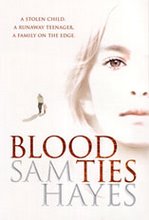
I've met a few of them. Yes, I was let loose on book-buyers. Quite brave of my publishers, I thought ;-) Headline are extremely good - renowned, even - for throwing impressive parties and dinners - things that make their authors feel like, well, authors. So I was very excited to be invited along to a number of dinners hosted by my publishers last year before the paperback of BLOOD TIES was released. There were perhaps half a dozen authors attending, and the other guests were...? Yep, book-buyers. They came from all types of establishments. Some were from the big high street chains, some bought for the indie bookshops, and some were buying for the supermarket giants. And they all had one thing in common. They knew everything there was to know about books. Their passion for the business shone through the delicious food, the freely-flowing wine, and the clouds of cigarette smoke. And there was a lot of all that.
I was surprised at how young some of them were. Yes, it could be that I'm just getting old, and of course people in their late twenties/early thirties are perfectly capable of deciding what sits on the shelves of Tesco. Several owners of independent bookshops attended the dinners. They were responsible for their own buying, their own marketing, shelf-stocking, and quite possibly cleaning the shop too. They are dedicated to their businesses. They run book groups, kids' mornings on a Saturday, invite authors to sign and talk, and serve coffee and cakes. They exhausted me just telling me about it!
Other book-buyers in the big chains or supermarkets have a very specific job description. Buy books that are going to sell. Buy lots of them, and buy them cheaply. Publishers will present their season's list well in advance - like any retail industry, really - and I assume that stock orders will mainly be based around this and other hype/publicity/future marketing campaigns planned. Meeting with the authors at the dinner is a bonus for all. They get to meet the names behind the titles they're buying, and we can flutter our eyelashes...I mean, talk sensibly about our work and future titles. It's fun. It gets us away from the office/study/kitchen table/understairs cupboard. Oh, and I can wear a posh dress and stay in a trendy boutique hotel.
So, to sum up: Book-buyers are VIPs in the publishing world. They get our books on the shelves. They like nice food and wine. My daughters like them because it means, the next day, they get given little shampoos and sewing kits.
Sam xx
NEXT UP: There are a lot of things beginning with C. Copyeditors, covers, character...
Book-buyers are Very Important People. When I say book-buyers, I don't mean the book-buying public. Of course, retail customers are extremely important, and I am grateful to every single one of them. Without them, there would be no book industry. There would be no me sitting here bashing away at the computer every day. No, I'm referring to the book-buyers who stock the bookshops and supermarkets. The ones that pick out lists of titles from the dozens of catalogues they receive, and the many sales presentations they sit through. They are pretty much gods and goddesses.
Before I was published, this part of the 'book' process wasn't something that had occured to me. The way I saw it, writers wrote books, publishers edited and printed books, bookshops sold books. Essentially, that's all true, of course. But there are many chains of people in between these milestones, and one key set is the book-buyers.
I've met a few of them. Yes, I was let loose on book-buyers. Quite brave of my publishers, I thought ;-) Headline are extremely good - renowned, even - for throwing impressive parties and dinners - things that make their authors feel like, well, authors. So I was very excited to be invited along to a number of dinners hosted by my publishers last year before the paperback of BLOOD TIES was released. There were perhaps half a dozen authors attending, and the other guests were...? Yep, book-buyers. They came from all types of establishments. Some were from the big high street chains, some bought for the indie bookshops, and some were buying for the supermarket giants. And they all had one thing in common. They knew everything there was to know about books. Their passion for the business shone through the delicious food, the freely-flowing wine, and the clouds of cigarette smoke. And there was a lot of all that.
I was surprised at how young some of them were. Yes, it could be that I'm just getting old, and of course people in their late twenties/early thirties are perfectly capable of deciding what sits on the shelves of Tesco. Several owners of independent bookshops attended the dinners. They were responsible for their own buying, their own marketing, shelf-stocking, and quite possibly cleaning the shop too. They are dedicated to their businesses. They run book groups, kids' mornings on a Saturday, invite authors to sign and talk, and serve coffee and cakes. They exhausted me just telling me about it!
Other book-buyers in the big chains or supermarkets have a very specific job description. Buy books that are going to sell. Buy lots of them, and buy them cheaply. Publishers will present their season's list well in advance - like any retail industry, really - and I assume that stock orders will mainly be based around this and other hype/publicity/future marketing campaigns planned. Meeting with the authors at the dinner is a bonus for all. They get to meet the names behind the titles they're buying, and we can flutter our eyelashes...I mean, talk sensibly about our work and future titles. It's fun. It gets us away from the office/study/kitchen table/understairs cupboard. Oh, and I can wear a posh dress and stay in a trendy boutique hotel.
So, to sum up: Book-buyers are VIPs in the publishing world. They get our books on the shelves. They like nice food and wine. My daughters like them because it means, the next day, they get given little shampoos and sewing kits.
Sam xx
NEXT UP: There are a lot of things beginning with C. Copyeditors, covers, character...
Monday, 15 September 2008
A is for Agent
Look, it's going to buy me twenty-six posts, okay? That is, as long as I can find things in publishing that begin with V, X and Z. Actually, the X isn't hard at all. But you'll have to wait a while for that one.
So I thought I'd do my own publishing A-Z. Knock up a true-to-life, author's-eye view of the industry. Completely from my point of view, of course, which is going to be unlike anyone else's. And no apologies for omissions, errors, or differences. This is what's been happening to me in the business for...well, the last twelve years at least. Starting with agents. Even though A for Anxiety was a close second.
Love them or hate them...think of all those form rejections and nine month waits...having an agent, in my opinion, is essential for an author. Thankfully I love mine. I'm very lucky. (Actually, very persistent, as you will see.) Literary agents are worker-outers, and not just in the financial sense. They work out deals, problems, and make all those phone calls you've been putting off. And they take you out for nice lunches. And stop you drinking too much at parties.
But getting one? It's not as if you can go order one off the internet. Or ring one up and say please represent me. Other agents are willing to take their percentage - estate agents, financial agents, even secret agents are easier to come by than literary ones. So why weren't they biting my hands off?
I've probably written an entire novel's worth of submission letters to 'suitable' agents over the years. Not all replied. Some replied within minutes to email submissions. The average wait for a reply to a submission package of letter, short synopsis and about fifty pages of writing was, I'd say, about two to three months. I hit small, one man agencies as well as the multi-agent giants. And it was always no. No, no, no. If that email pinged back immediately, I knew it was no. How could they have read anything so quickly? A big fat self-addressed envelope through the door? Nope. Nada. Zilch. Always no. Before opening it, I'd kid myself that they'd taken a photocopy of the typescript and were politely returning this one with an immediate acceptance letter and agency contract. It's quite nice to place the envelope, unopened, on the kitchen table, have a cup of tea, and sit and stare at it. Not-quite-broken bad news. Still that hope.
Here are some of my rejections. Just little snippets from letters over the years. I have a thick folder of them.
'I'm afraid that after careful consideration, our editors have decided it's not right for our lists.'
'I am sorry for the negative response but do feel that an agent must be wholeheartedly and unreservedly behind a work if he hopes to sell it to publishers.'
'Don't be too disheartened by this letter. Due to the huge pressure of work, we have to be very selective. We receive 200 submissions per week.'
'We are taking on extremely few new clients at the moment.'
'I'm afraid I don't love the material, so I will have to pass.'
'I wish you better luck elsewhere.'
'I would not be able to place this on my list.'
'I found your material promising but not quite right for my list.'
'I am not confident I could attract the interest of a publisher.'
'It's a dark story, in my view perhaps a little overwrought.'
'I don't feel this is something I could take further.'
'Thank you for your query letter and synopsis, which we have read with interest. We would like to request the first three chapters.'
Thank you for sending us the first three chapters. Unfortunately, it is not up to publication standard.'
'Thank you for sending me the pages. I will be in touch when I have read them.'
'I have now read your pages. I think I am missing something. I was initially stumped by the opening...but then I began to connect...anyway, I will wait to read some more.'
'Thank you for sending me the rest of your typescript. Sadly, I do not feel this is something I would be able to represent.'
'I started to read this with the same enthusiasm I had for your writing first time round...But I found this novel somehow out of date...'
'Clever writing but not my kind of thing, sorry.'
'As explained, I am taking on so few new clients I have to be very enthusiastic before committing.'
'I do very much like your writing but, alas, I don't like this book quite enough to feel I can offer to represent you. But someone else will, I feel sure of it.'
Sound familiar? These are a tiny part of my collection. I'm very proud of them. Many authors say they can wallpaper their living room with rejections. I could wallpaper my entire house. And next door.
Assuming you have a spark of interest from an agent, what happens next? They've read the first fifty pages and liked it, so it's highly likely they might call you up and request the rest of the manuscript. Speaking to an agent on the telephone is a bit like having god pop in for a chat. You're convinced it won't ever happen, even if you do believe.
The first agent I ever spoke to wasn't actually on the phone. It was in Real Life. Face to face. Breathing the same air as him. I'd approached this agent - actually recommended by someone I'd previously met 'in the business' - and he kindly read my work. He invited me to come to his office. This was a very big deal. And I knew, just knew, that I was going to blow it. And I did. I'd been given this opportunity, literally an angel-sent invitation into the inner sanctum of the literary world, and I completely and utterly crumbled. And he sensed it, too.
What did I do wrong? Loads, and it's all too cringeworthy to write about. Probably, if I'm honest, the biggest mistake was that I never followed up successfully with the kind of ideas he was after. At the time, my writing was too experimental for his liking. He represented commercial fiction as well as some very well known TV names. My little offerings weren't for him. He said he saw me, ultimately, as a psychological thriller writer. That was back in 2002. Astute chap, eh? Towards the end of our meet, he asked me: Will you write a novel about a paedophile? I said No, I won't. Go figure.
The next time I met an agent was at a writers' convention. I was writing horror and fantasy, convinced it was where my heart lay. After all, I'd been writing in this genre since I was ten years old. It was a genre-based get together of fans, publishing folk and writers. There were workshops and panels and interesting people. I made some nice friends and good contacts. Plus, highlight of all highlights, I'd booked myself a 'Pitch to the Agent' session. I had ten minutes or so to tell her why she should take me on as a client. She'd already read my material prior to the meet. Nothing scary then.
In fact, it wasn't scary at all. She was very nice. And I don't think I made a tit of myself this time. She even said, if the novel continued in this way (it was an unfinished novel!), then she'd be very interested in representing me. It was as good as a 'yes' for me. I left with a handshake, a smile, and the extra oomph I needed to write the remaining eighty thousand words. A year later, I delivered my manuscript. She remembered me. She read it. Then she rejected me.
That was in 2003. Much writing 'stuff' happened subsequently, including more of the letter-based submissions . But agent-wise, nothing positive kicked-off again until early 2006. I been writing for Virgin Books - two novels - (see future posts for this - probably V and X!). I'd also been in touch with an editor at a big publisher via an 'industry contact' and she was teetering about my book. In the end she said no, but recommended me to a well-respected literary agency. I worked closely with them for a month or two, changing and re-shaping my novel as per their suggestions. They were very good suggestions and the novel was much better for it. I re-submitted and they re-read. Then they rejected me.
Because of the novels I was writing for Virgin books, I'd joined the Society of Authors. Membership includes vetting of contracts. I was at a regional Society meeting and bumped into a writer that I'd met a couple of years before. We got chatting and he said that he'd mention me to his agency, see if they'd perhaps take a look at my current novel. Writers are nice like that.
Three months later, I was sitting in a restaurant in London with my new agent. She'd read my novel (taking only a weekend!), decided she liked it, decided I was right for her list, decided I probably had more novels in me, decided I wasn't an idiot (because now, agent-experienced me didn't act like one) and decided to offer me an agency agreement. Then I got sick and ended up with a heart monitor, which actually recorded on its trace the skip of my many palpitations as my agent rang me to say she'd got me a two book deal. The news is officially recorded in my medical records. The doctors said I wasn't going to die, which was also good.
I should add that my lovely first agent decided after a while that a change of career was in order for her. (I don't think it was anything to do with me.) I was sad to see her go but also delighted to be represented by another wonderful lady at the same agency. In actual fact, it was an agency that I'd approached years before with some of my more 'experimental' work. They sent me a very swift and personal response, encouraging me to approach them in the future.
So, you can see, 'A is for Agent' is very closely related to 'A is for Anxiety'. The moral of this very long tale: Try and get a good deal on discount postage and never give up. They get worn down in the end.
So I thought I'd do my own publishing A-Z. Knock up a true-to-life, author's-eye view of the industry. Completely from my point of view, of course, which is going to be unlike anyone else's. And no apologies for omissions, errors, or differences. This is what's been happening to me in the business for...well, the last twelve years at least. Starting with agents. Even though A for Anxiety was a close second.
Love them or hate them...think of all those form rejections and nine month waits...having an agent, in my opinion, is essential for an author. Thankfully I love mine. I'm very lucky. (Actually, very persistent, as you will see.) Literary agents are worker-outers, and not just in the financial sense. They work out deals, problems, and make all those phone calls you've been putting off. And they take you out for nice lunches. And stop you drinking too much at parties.
But getting one? It's not as if you can go order one off the internet. Or ring one up and say please represent me. Other agents are willing to take their percentage - estate agents, financial agents, even secret agents are easier to come by than literary ones. So why weren't they biting my hands off?
I've probably written an entire novel's worth of submission letters to 'suitable' agents over the years. Not all replied. Some replied within minutes to email submissions. The average wait for a reply to a submission package of letter, short synopsis and about fifty pages of writing was, I'd say, about two to three months. I hit small, one man agencies as well as the multi-agent giants. And it was always no. No, no, no. If that email pinged back immediately, I knew it was no. How could they have read anything so quickly? A big fat self-addressed envelope through the door? Nope. Nada. Zilch. Always no. Before opening it, I'd kid myself that they'd taken a photocopy of the typescript and were politely returning this one with an immediate acceptance letter and agency contract. It's quite nice to place the envelope, unopened, on the kitchen table, have a cup of tea, and sit and stare at it. Not-quite-broken bad news. Still that hope.
Here are some of my rejections. Just little snippets from letters over the years. I have a thick folder of them.
'I'm afraid that after careful consideration, our editors have decided it's not right for our lists.'
'I am sorry for the negative response but do feel that an agent must be wholeheartedly and unreservedly behind a work if he hopes to sell it to publishers.'
'Don't be too disheartened by this letter. Due to the huge pressure of work, we have to be very selective. We receive 200 submissions per week.'
'We are taking on extremely few new clients at the moment.'
'I'm afraid I don't love the material, so I will have to pass.'
'I wish you better luck elsewhere.'
'I would not be able to place this on my list.'
'I found your material promising but not quite right for my list.'
'I am not confident I could attract the interest of a publisher.'
'It's a dark story, in my view perhaps a little overwrought.'
'I don't feel this is something I could take further.'
'Thank you for your query letter and synopsis, which we have read with interest. We would like to request the first three chapters.'
Thank you for sending us the first three chapters. Unfortunately, it is not up to publication standard.'
'Thank you for sending me the pages. I will be in touch when I have read them.'
'I have now read your pages. I think I am missing something. I was initially stumped by the opening...but then I began to connect...anyway, I will wait to read some more.'
'Thank you for sending me the rest of your typescript. Sadly, I do not feel this is something I would be able to represent.'
'I started to read this with the same enthusiasm I had for your writing first time round...But I found this novel somehow out of date...'
'Clever writing but not my kind of thing, sorry.'
'As explained, I am taking on so few new clients I have to be very enthusiastic before committing.'
'I do very much like your writing but, alas, I don't like this book quite enough to feel I can offer to represent you. But someone else will, I feel sure of it.'
Sound familiar? These are a tiny part of my collection. I'm very proud of them. Many authors say they can wallpaper their living room with rejections. I could wallpaper my entire house. And next door.
Assuming you have a spark of interest from an agent, what happens next? They've read the first fifty pages and liked it, so it's highly likely they might call you up and request the rest of the manuscript. Speaking to an agent on the telephone is a bit like having god pop in for a chat. You're convinced it won't ever happen, even if you do believe.
The first agent I ever spoke to wasn't actually on the phone. It was in Real Life. Face to face. Breathing the same air as him. I'd approached this agent - actually recommended by someone I'd previously met 'in the business' - and he kindly read my work. He invited me to come to his office. This was a very big deal. And I knew, just knew, that I was going to blow it. And I did. I'd been given this opportunity, literally an angel-sent invitation into the inner sanctum of the literary world, and I completely and utterly crumbled. And he sensed it, too.
What did I do wrong? Loads, and it's all too cringeworthy to write about. Probably, if I'm honest, the biggest mistake was that I never followed up successfully with the kind of ideas he was after. At the time, my writing was too experimental for his liking. He represented commercial fiction as well as some very well known TV names. My little offerings weren't for him. He said he saw me, ultimately, as a psychological thriller writer. That was back in 2002. Astute chap, eh? Towards the end of our meet, he asked me: Will you write a novel about a paedophile? I said No, I won't. Go figure.
The next time I met an agent was at a writers' convention. I was writing horror and fantasy, convinced it was where my heart lay. After all, I'd been writing in this genre since I was ten years old. It was a genre-based get together of fans, publishing folk and writers. There were workshops and panels and interesting people. I made some nice friends and good contacts. Plus, highlight of all highlights, I'd booked myself a 'Pitch to the Agent' session. I had ten minutes or so to tell her why she should take me on as a client. She'd already read my material prior to the meet. Nothing scary then.
In fact, it wasn't scary at all. She was very nice. And I don't think I made a tit of myself this time. She even said, if the novel continued in this way (it was an unfinished novel!), then she'd be very interested in representing me. It was as good as a 'yes' for me. I left with a handshake, a smile, and the extra oomph I needed to write the remaining eighty thousand words. A year later, I delivered my manuscript. She remembered me. She read it. Then she rejected me.
That was in 2003. Much writing 'stuff' happened subsequently, including more of the letter-based submissions . But agent-wise, nothing positive kicked-off again until early 2006. I been writing for Virgin Books - two novels - (see future posts for this - probably V and X!). I'd also been in touch with an editor at a big publisher via an 'industry contact' and she was teetering about my book. In the end she said no, but recommended me to a well-respected literary agency. I worked closely with them for a month or two, changing and re-shaping my novel as per their suggestions. They were very good suggestions and the novel was much better for it. I re-submitted and they re-read. Then they rejected me.
Because of the novels I was writing for Virgin books, I'd joined the Society of Authors. Membership includes vetting of contracts. I was at a regional Society meeting and bumped into a writer that I'd met a couple of years before. We got chatting and he said that he'd mention me to his agency, see if they'd perhaps take a look at my current novel. Writers are nice like that.
Three months later, I was sitting in a restaurant in London with my new agent. She'd read my novel (taking only a weekend!), decided she liked it, decided I was right for her list, decided I probably had more novels in me, decided I wasn't an idiot (because now, agent-experienced me didn't act like one) and decided to offer me an agency agreement. Then I got sick and ended up with a heart monitor, which actually recorded on its trace the skip of my many palpitations as my agent rang me to say she'd got me a two book deal. The news is officially recorded in my medical records. The doctors said I wasn't going to die, which was also good.
I should add that my lovely first agent decided after a while that a change of career was in order for her. (I don't think it was anything to do with me.) I was sad to see her go but also delighted to be represented by another wonderful lady at the same agency. In actual fact, it was an agency that I'd approached years before with some of my more 'experimental' work. They sent me a very swift and personal response, encouraging me to approach them in the future.
So, you can see, 'A is for Agent' is very closely related to 'A is for Anxiety'. The moral of this very long tale: Try and get a good deal on discount postage and never give up. They get worn down in the end.
Subscribe to:
Posts (Atom)





.jpg)

 Posts
Posts

